

Understanding AI in DevOps Industry Transformation
The future of AI DevOps 2030 represents a fundamental shift from manual processes to intelligent automation that will reshape how organizations develop, deploy, and maintain software systems. Artificial Intelligence in DevOps extends far beyond simple automation scripts—it encompasses machine learning in DevOps workflows, predictive analytics for DevOps operations, and intelligent automation in DevOps pipeline architectures that learn from historical patterns and adapt to changing conditions without human intervention.
Organizations seeking to hire AI DevOps consulting services must understand that AI DevOps automation solutions deliver transformative capabilities across the entire software development lifecycle. From code generation and testing to deployment orchestration and incident response, AI-powered systems are eliminating bottlenecks that have constrained DevOps practices for decades. The convergence of artificial intelligence for IT operations (AIOps) with traditional DevOps methodologies creates unprecedented opportunities for enterprises pursuing competitive advantage through technology innovation.
AI in the DevOps industry is transforming legacy security approaches, turning traditional friction between rapid delivery and risk management into seamless, automated protection. Machine learning models now analyze code, enforce security standards, and proactively address threats before they affect production, resulting in improved system reliability, reduced downtime, and optimized resource usage. As cloud-native architectures and software delivery pipelines scale, organizations increasingly rely on these AI-powered solutions to embed security at every stage, ensuring velocity and compliance for sustainable business innovation.
Current State and 2030 Predictions for DevOps
AI tools will widely optimize and automate DevOps processes by 2030, with the probability of developing fully autonomous development pipelines being very high. This transformation extends beyond incremental improvements to represent a complete reimagining of how software reaches production environments.
According to industry reports, the DevOps market will reach $38,453.1 million by 2030, at a compound annual growth rate of 25.2% during the period 2024-2030, driven primarily by increased demand for faster application delivery, enhanced business productivity, and elimination of unnecessary operational overhead. This explosive growth creates substantial opportunities for AI DevOps automation app development companies serving enterprises across industries.
By 2030, AI is likely to become a key technology across the economy, present in every facet of people's interaction with computers and mobile devices. For DevOps specifically, artificial intelligence systems will help predict required resources more accurately and significantly increase the effectiveness of strategic decisions in software development at every management level. Organizations implementing AI DevOps services enterprise solutions today establish foundations for sustained competitive advantages extending throughout the next decade.
The integration of artificial intelligence and machine learning into DevOps processes is no longer a distant vision but a growing reality, with AI-powered tools enhancing various aspects from automating repetitive tasks to optimizing resource allocation. This evolution transforms DevOps from reactive problem-solving to proactive system optimization, where intelligent systems anticipate issues before they impact operations and automatically implement solutions aligned with organizational objectives.
The future of AI powered DevOps workflows 2030 includes several transformative capabilities currently emerging from research and early deployment stages:
Fully Autonomous CI/CD Pipelines: AI-powered DevOps will automate infrastructure, deployment, and incident response, creating end-to-end automation where human intervention becomes exceptional rather than routine. These systems will generate deployment strategies, execute releases across complex multi-cloud environments, and roll back problematic changes automatically based on real-time performance monitoring.
Self-Healing Infrastructure: AI-driven DevOps tools will promote self-healing systems which can detect and remediate issues autonomously without the need for manual interventions. When applications experience performance degradation or service disruptions, intelligent systems will diagnose root causes, implement corrections, and verify remediation effectiveness without requiring human operators.
Predictive Resource Management: Predictive analytics will help with automatic scaling and resource allocation, enabling infrastructure to adapt dynamically to anticipated demand patterns rather than reacting to current loads. This proactive approach reduces costs while maintaining optimal performance during traffic fluctuations.

Key Technologies Shaping Future of AI Powered DevOps Workflows 2030
The transformation toward fully intelligent DevOps requires several complementary technologies working synergistically to create comprehensive automation ecosystems.
AIOps (Artificial Intelligence for IT Operations)
AIOps is already helping teams detect issues, automate responses, and optimize infrastructure without human intervention, with AI-driven monitoring spotting problems before they cause outages. This represents a paradigm shift from reactive incident management to proactive system optimization where AI continuously analyzes performance metrics, identifies deviation patterns, and implements preventive measures.
Enterprise organizations implementing AIOps DevOps trends benefit from reduced mean time to resolution (MTTR), decreased operational costs, and improved system reliability. AI systems process millions of data points across distributed architectures, correlating events that human operators might miss and identifying complex failure cascades before they escalate into critical incidents.
Machine Learning in DevOps Workflows
Machine learning algorithms transform DevOps through several critical applications beyond basic automation. ML algorithms can now automatically generate test cases based on code changes, drastically reducing the need for manual test creation and speeding up CI/CD pipelines while ensuring higher-quality releases and faster deployment times.
Intelligent test generation adapts to application evolution, creating comprehensive test suites that cover edge cases developers might overlook. These systems analyze code changes, identify potential integration issues, and generate tests validating not just individual functions but complex workflows spanning multiple services.
Anomaly Detection and Root Cause Analysis: AI systems learn normal operational patterns for applications and infrastructure, immediately flagging deviations indicating potential issues. Rather than relying on static thresholds that generate false positives, machine learning models understand contextual variations and distinguish genuine problems from benign fluctuations.
Intelligent Code Review and Quality Assurance: AI-assisted coding like GitHub Copilot will speed up scripting and automation tasks, while advanced systems analyze code for security vulnerabilities, performance anti-patterns, and maintainability concerns. These tools provide real-time feedback during development, preventing issues from reaching production environments.
CI/CD Pipelines with AI Automation
Modern CI/CD pipelines with AI automation represent sophisticated orchestration systems that optimize every stage of software delivery. Traditional pipelines follow rigid, predefined sequences, but intelligent pipelines adapt strategies based on change characteristics, historical success rates, and current system conditions.
AI-enhanced pipelines determine optimal deployment strategies—deciding when to use blue-green deployments versus canary releases versus rolling updates based on change risk profiles. They automatically adjust rollout speeds, monitoring key performance indicators and immediately halting deployments exhibiting problematic behaviors before widespread impact occurs.
Automated Rollback Decision-Making: When deployments introduce issues, AI systems evaluate whether problems warrant immediate rollback or can be addressed through configuration adjustments or hotfixes. This nuanced decision-making considers business impact, remediation complexity, and historical incident patterns.
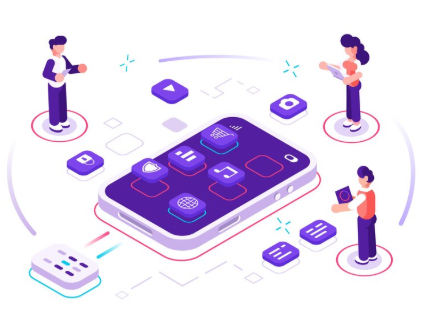
iOS AI DevOps Automation Solutions and Android AI DevOps Automation Solutions: Mobile application development introduces unique DevOps challenges including device fragmentation, OS versioning, and app store approval processes. Specialized AI systems optimized for iOS AI DevOps automation solutions and Android AI DevOps automation solutions streamline mobile-specific workflows, automating build variants, managing provisioning profiles, and optimizing app bundle sizes while ensuring compatibility across device ecosystems.
DevSecOps and AI-Powered Security in DevOps
Security integration represents one of the most critical applications of AI in DevOps industry evolution. DevSecOps continues to gain momentum with emphasis on integrating security practices including automated code scanning early in the Software Development Lifecycle (SDLC), ensuring that security vulnerabilities are identified and addressed during the coding phase rather than post-deployment.
AI security systems analyze code commits in real-time, identifying vulnerabilities through pattern matching, static analysis, and comparison against known exploit databases. These systems provide contextual remediation guidance, suggesting specific code modifications addressing identified vulnerabilities while maintaining functionality.
Threat Intelligence Integration: AI-powered security platforms continuously ingest threat intelligence feeds, updating detection algorithms as new attack vectors emerge. When security researchers discover novel exploits, AI systems automatically scan deployed applications and infrastructure for exposure, prioritizing remediation based on actual risk rather than generic severity ratings.
Behavioral Security Monitoring: Rather than relying exclusively on signature-based detection, AI security systems establish baseline behavioral patterns for applications and users, flagging anomalous activities indicating potential security breaches even when specific attack signatures remain unrecognized.
AIOps DevOps Trends Revolutionizing Enterprise Operations
Several specific trends within the broader AIOps DevOps trends landscape will dominate enterprise adoption through 2030, fundamentally transforming how organizations approach operations management.
Predictive Analytics for DevOps Operations
AI is used to analyze patterns in past incidents, predict potential failures, and recommend solutions before they escalate into critical issues, enabling teams to proactively address problems rather than react after the fact. This shift from reactive to predictive operations management represents one of the most valuable applications of artificial intelligence in DevOps.
Predictive analytics examines historical incident data, system performance metrics, deployment outcomes, and external factors like seasonal traffic patterns to forecast potential issues. Organizations receive advance warnings about capacity constraints, performance degradation trends, and infrastructure vulnerabilities, allowing preemptive action preventing service disruptions.
Capacity Planning and Cost Optimization: AI systems analyze usage patterns, predict future resource requirements, and recommend infrastructure adjustments optimizing costs while maintaining performance. These recommendations consider complex factors including licensing tiers, reserved capacity discounts, and workload characteristics that human planners struggle to optimize simultaneously.
Intelligent Automation in DevOps Pipeline Orchestration
Intelligent automation in DevOps pipeline extends beyond executing predefined scripts to encompass adaptive workflows that modify behavior based on context and learning from outcomes. AI will enhance problem-solving capabilities, automate repetitive tasks, and provide predictive insights, ultimately leading to more efficient and resilient systems.
Modern pipelines incorporate feedback loops where AI systems evaluate deployment outcomes, identify process inefficiencies, and autonomously optimize workflow configurations. Over time, pipelines become increasingly efficient as AI discovers shortcuts, eliminates redundant steps, and parallelizes operations previously executed sequentially.
Natural Language Pipeline Configuration: The future of programming makes it easy to write code without worrying about the programming language, with similar transformations occurring in DevOps configuration. Developers will describe desired pipeline behaviors in natural language, and AI systems will generate appropriate configurations, translating business requirements into technical implementations without requiring deep DevOps expertise.
Infrastructure as Code Evolution
GitOps emphasizes the use of Git repositories for storing declarative infrastructure and application code, ensuring that all changes to the production environment are version-controlled, traceable, auditable, and collaborative. The integration of AI with GitOps practices creates powerful synergies where intelligent systems validate infrastructure changes before deployment, predict potential conflicts, and automatically optimize resource configurations.
Traditional infrastructure as code requires developers to understand cloud provider APIs, resource dependencies, and architectural best practices. AI-enhanced systems abstract these complexities, allowing teams to describe infrastructure requirements at higher levels while AI generates optimized implementations considering cost, performance, security, and reliability requirements.
Regional Adoption: AI DevOps Automation UAE and Saudi Arabia
The Middle East region, particularly AI DevOps automation UAE and AI DevOps automation Saudi Arabia markets, demonstrates accelerated adoption of intelligent DevOps practices driven by national digital transformation initiatives and substantial investments in technology infrastructure.
The UAE's National AI Strategy 2031 emphasizes embedding artificial intelligence across key economic sectors, creating strong governmental support for organizations implementing AI DevOps services enterprise solutions. This strategic commitment provides regulatory clarity, infrastructure investments, and talent development programs facilitating rapid AI adoption across industries.
Saudi Arabia's Vision 2030 economic diversification program prioritizes technology sector development, with substantial investments in cloud infrastructure, data centers, and AI research initiatives. Organizations implementing business AI surveillance services UAE and AI DevOps automation Saudi Arabia solutions benefit from this supportive ecosystem including government incentives, access to skilled talent, and collaboration opportunities with international technology providers.
Hyena AI DevOps Solutions and Regional Innovation: Specialized platforms like Hyena AI DevOps solutions developed specifically for Middle Eastern markets incorporate regional requirements including Arabic language support, cultural considerations, and compliance with local data sovereignty regulations. These regional innovations demonstrate how AI DevOps automation app development companies tailor solutions addressing market-specific needs while delivering global best practices.
GCC organizations implementing AI DevOps automation solutions frequently serve as regional technology hubs, with successful deployments expanding across neighboring countries. This regional leadership creates opportunities for consulting firms, training providers, and technology vendors specializing in AI-powered DevOps workflows adapted to Middle Eastern operational contexts.
Frequently Asked Questions About AI in DevOps
Q: Will AI replace DevOps engineers by 2030?
While some predict dramatic workforce displacement, the more likely scenario involves role transformation rather than elimination. AI-powered assistants can't fix problems independently but should be considered as having the most senior engineer helping identify problems by narrowing down scope. DevOps professionals will shift from executing routine tasks to strategic planning, architectural design, and managing AI systems themselves. Organizations will continue requiring human expertise for complex problem-solving, business context understanding, and ethical decision-making that AI cannot fully automate.
Q: How does machine learning in DevOps workflows improve software quality?
Machine learning enhances software quality through multiple mechanisms including intelligent test generation, anomaly detection, and predictive defect identification. AI systems analyze code changes, identify high-risk modifications requiring additional testing, and automatically generate comprehensive test suites covering edge cases. These capabilities reduce defect escape rates while accelerating release cycles.
Q: What makes AIOps different from traditional DevOps automation?
Traditional DevOps automation executes predefined scripts and workflows, while AIOps employs machine learning to adapt behaviors based on observations and outcomes. AIOps systems learn from operational patterns, predict issues before occurrence, and automatically optimize processes without explicit programming for every scenario. This adaptive intelligence distinguishes AIOps from static automation approaches.
Q: How do organizations implement DevSecOps and AI-powered security in DevOps effectively?
Successful implementation requires integrating security analysis throughout development pipelines rather than treating it as separate phase. Organizations should deploy AI security tools performing automated code scanning, vulnerability assessment, and compliance verification at every pipeline stage. Continuous security monitoring combined with automated remediation creates comprehensive protection without impeding development velocity.
Q: What skills should DevOps professionals develop for the AI-powered future?
Professionals should develop expertise in machine learning fundamentals, AI system management, data analysis, and prompt engineering for interacting with AI assistants. Understanding how to evaluate AI recommendations, identify algorithmic biases, and make informed decisions when AI suggestions conflict with business requirements becomes crucial. Additionally, skills in cloud-native architectures, containerization, and distributed systems remain foundational as AI augments rather than replaces these capabilities.
Conclusion: Embracing the AI-Powered DevOps Future
The future of AI DevOps 2030 promises unprecedented automation, intelligence, and efficiency in software development and operations. Organizations embracing AI DevOps automation solutions today position themselves for sustained competitive advantages as intelligent systems become standard expectations rather than differentiating capabilities.
The DevOps market growth is expected to grow $21.13 billion by 2031, driven primarily by AI integration across development lifecycles. Enterprises implementing predictive analytics for DevOps operations, intelligent automation in DevOps pipeline, and comprehensive AIOps platforms will deliver software faster, more reliably, and more securely than competitors relying on traditional approaches.
The transformation toward AI-powered DevOps requires strategic planning, organizational change management, and continuous learning as technologies evolve rapidly. However, the benefits—including reduced operational costs, improved software quality, accelerated time-to-market, and enhanced security posture—justify the investments required for successful implementation.
Ready to Transform Your DevOps with AI?
Partner with leading AI DevOps automation app development company experts who understand both artificial intelligence capabilities and DevOps best practices. Whether you need iOS AI DevOps automation solutions, Android AI DevOps automation solutions, or comprehensive enterprise platforms, our team delivers proven expertise implementing intelligent workflows tailored to your operational requirements.
Hire AI DevOps consulting services that combine deep technical knowledge with practical implementation experience across industries. Contact us today to discover how CI/CD pipelines with AI automation, machine learning in DevOps workflows, and predictive analytics for DevOps operations can revolutionize your software delivery capabilities while positioning your organization for success in the AI-powered future. Schedule your consultation now to explore custom AI DevOps automation solutions designed for your specific business objectives and technical environment.






Write a comment ...